
Programming Instructions - INTELLICODE® 315/390MHZ SINGLE DOOR EXTERNAL RECEIVER KIT


• Remove and immediately recycle or dispose of used batteries according to local regulations and keep away from children.
Do NOT dispose of batteries in household trash or incinerate.
• Even used batteries may cause severe injury or death.
• Call a local poison control center for treatment information.
• Replace only with Type CR2032 3V batteries.
• Non-rechargeable batteries are not to be recharged.
• Do not force discharge, recharge, disassemble, heat above (manufacturer’s specified temperature rating) or incinerate. Doing so may result in injury due to venting, leakage or explosion resulting in chemical burns.
• Ensure the batteries are installed correctly according to polarity (+ and -).
• Do not mix old and new batteries, different brands or types of batteries, such as alkaline, carbon-zinc, or rechargeable batteries.
• Remove and immediately recycle or dispose of batteries from equipment not used for an extended period of time according to local regulations.
• Always completely secure the battery compartment. If the battery compartment does not close securely, stop using the product, remove the batteries, and keep them away from children.


 IMPORTANT NOTICE: This kit may only be used on an operator manufactured 1993
and later with working safety sensors.
PRE-INSTALLATION: For use on momentary contact capable units only
• If existing receiver will no longer be used, erase remotes. Refer to operator owners
manual, if needed.
• Determine power source and wire to receiver using figures 1, 2 or 3. Refer to
operator owners manual, if needed.
INSTALLATION:
1. Unplug or turn off breaker that supplies power to operator.
2. Find a suitable mounting point for receiver within a few feet of the operator.
3. Mount receiver to wall or ceiling. Due to variations in mounting methods,
hardware is not included.
4. Strip ends of included bell wire and install between receiver and residential (Fig.
1-A) or commercial operator connections. If using the recommended power
supply, plug connector from power pack into receiver (FIG. 1). To wire for an
alternate power supply in a commercial application, see FIG. 2-3.
5. Install coax antenna on to receiver coax connector.
6. If using 115VAC power pack, plug power pack into
standard 115VAC outlet.
7. Use included staples to tidy any hanging wires.
8. Restore power to operator.


NOTE: Programming must be completed with 30 seconds upon pressing programming
(LEARN) button or receiver will turn off remote pairing mode. Press LEARN button again to
enable pairing mode and resume programming remote.
NOTE: If receiver does not perform properly, check connections between power source and receiver and connections between receiver and operator.
PROGRAMMING INTELLICODE® REMOTE:
Remove tab to activate remote control
1. Press the LEARN button on the receiver. (LED begins flashing).
2. Press the remote button once. (LED will change to solid).
3. Press the remote button a second time (LED will turn off).
4. The next remote button press will activate the receiver.
NOTE: If receiver LED flashes rapidly for 5 seconds then receiver
memory is full. Erase remotes to enable programming.
Clearing All Remotes:
1. Press and hold the LEARN button. (LED changes to solid).
2. After approximately 20 seconds the red LED will flash three times. Release the
LEARN button. All remotes have been cleared from the receiver.

This device complies with part 15 of the FCC Rules and Industry Canada’s
license-exempt RSSs. Operation is subject to the following two conditions: (1)
This device may not cause harmful interference, and (2) this device must accept
any interference received, including interference that may cause undesired
operation. Any changes or modifications not expressly approved by the party
responsible for compliance could void the user’s authority to operate this
equipment.
Le présent appareil est conforme aux CNR d’Industrie Canada applicables aux
appareils radio exempts de licence. L’exploitation est autorisée aux deux conditions
suivantes: 1) l’appareil ne doit pas produire de brouillage; 2) l’utilisateur de l’appareil
doit accepter tout brouillage radioélectrique subi, même si le brouillage est
susceptible d’en compromettre le fonctionnement.
-
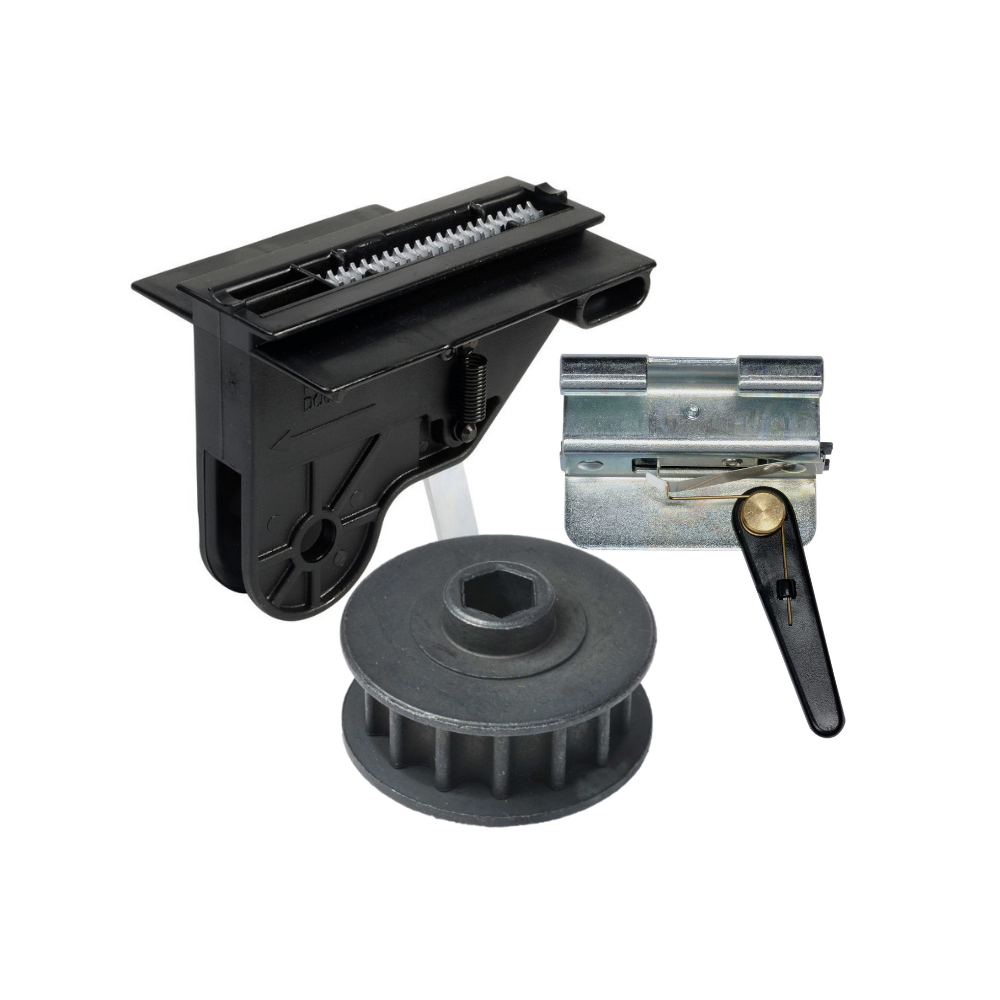
Genie Garage Door Opener Replacement Parts
Common Garage Door Problems & the Parts That Fix Them Door won’t...
-
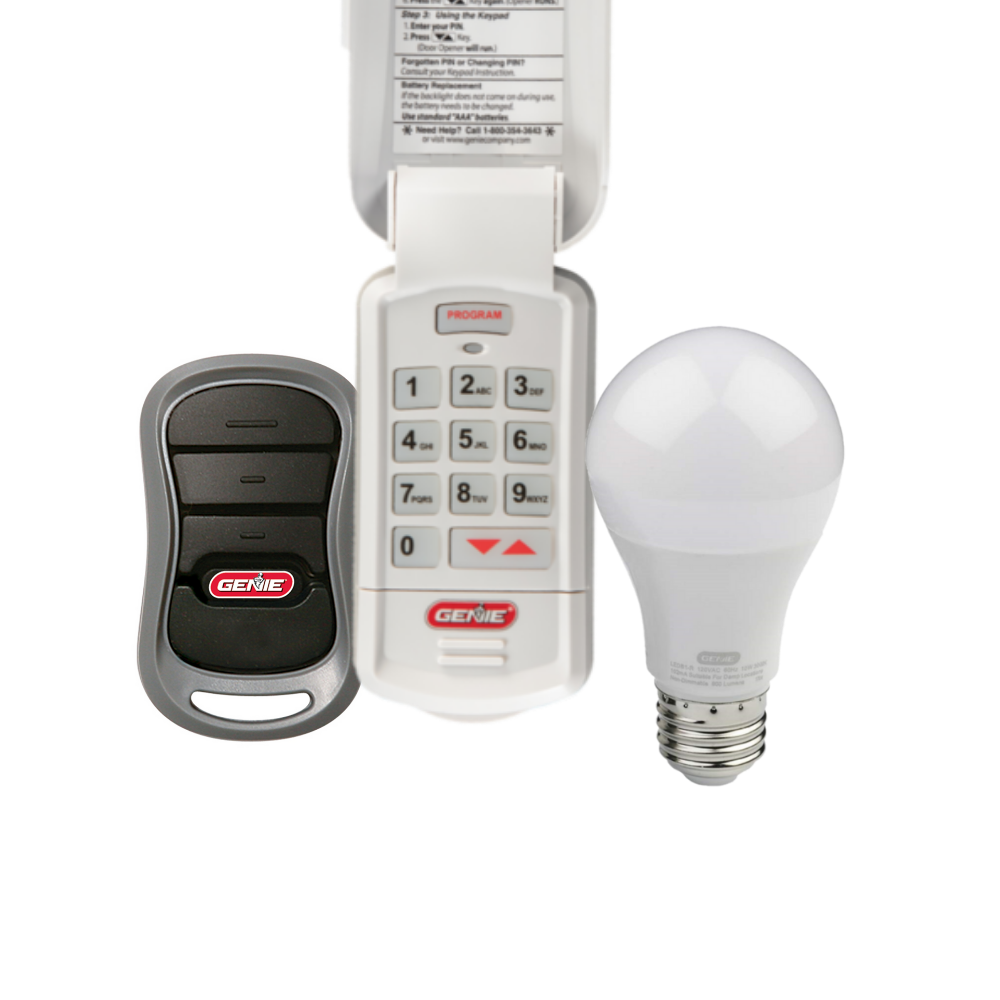
Accessories
[split] Find the right accessories for your garage door opener: The Genie...
-
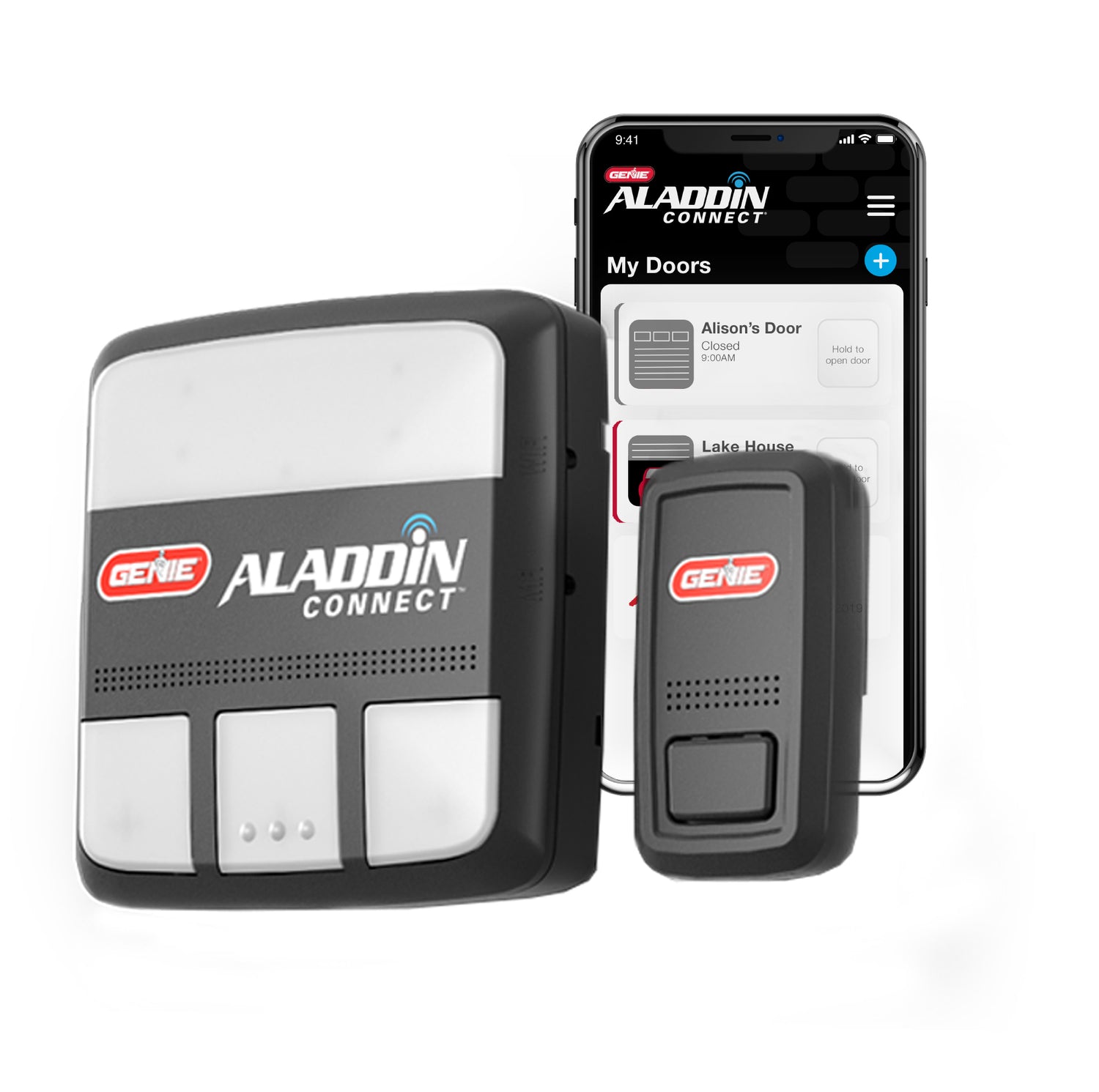
Smart Device Compatible
Smart Device Compatible Garage "Can I make my garage door opener smart?"...
